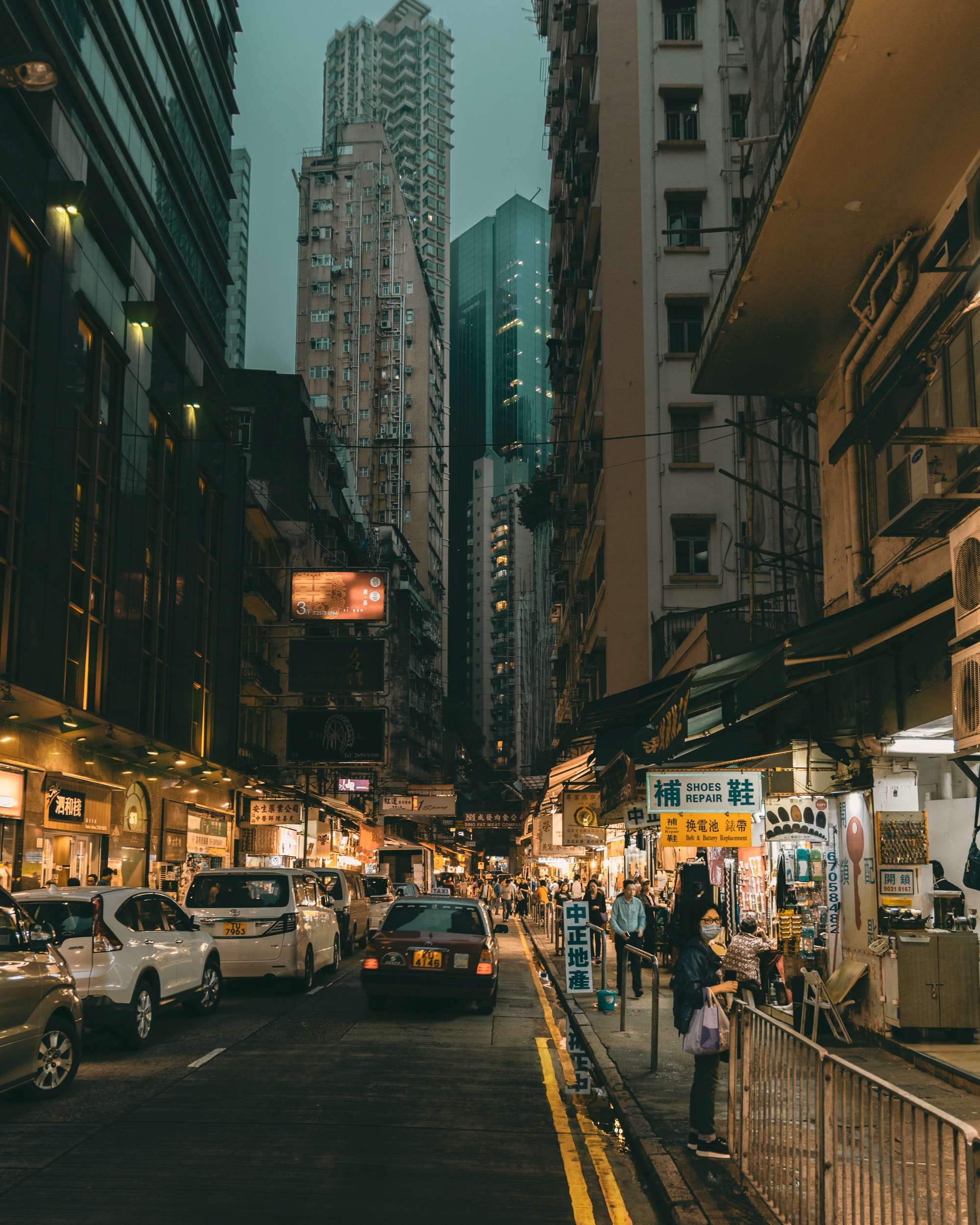
Photo by Dimitris.s12 from Pexels
In a piece published by The Observer last month, Darrell Bricker and John Ibbitson wrote an article arguing that UN predictions about the world’s population are wrong. I recall that, as a 17-year-old when the 7 billionth human was born, I was amazed by that figure. 7 billion. It was hard to visualise how massive a number 1 million was, let alone 7 billion.
As I continued reading the article, I began to feel unease. The questions raised by the authors in the article, in response to the UN projections about the world population, seemed nonsensical to me. “Where would they live? How can we feed them? How many more of us can our “fragile” planet withstand?”
In a course at the University of Texas at Austin, evolutionary ecologist Dr. Eric Pianka, best known for his 2006 speech in which he “endorsed the elimination of 90% of the human population” (yikes) as a solution for “overpopulation” and was subsequently interviewed by the FBI (double yikes), was more than kind enough to crunch some figures that we’ll use here. Thanks “Dr. Doom”!
According to Dr. Pianka, if all the habitable land on Earth were equally distributed among all human beings present on Earth (7 billion people), you would get just under one hectare of land per human. That’s equivalent to each human having roughly the size of a rugby field to themselves. Pianka would go on to say that those estimates don’t include useful things like roads, schools, hospitals, shopping malls, rivers, lakes, golf courses and so on.
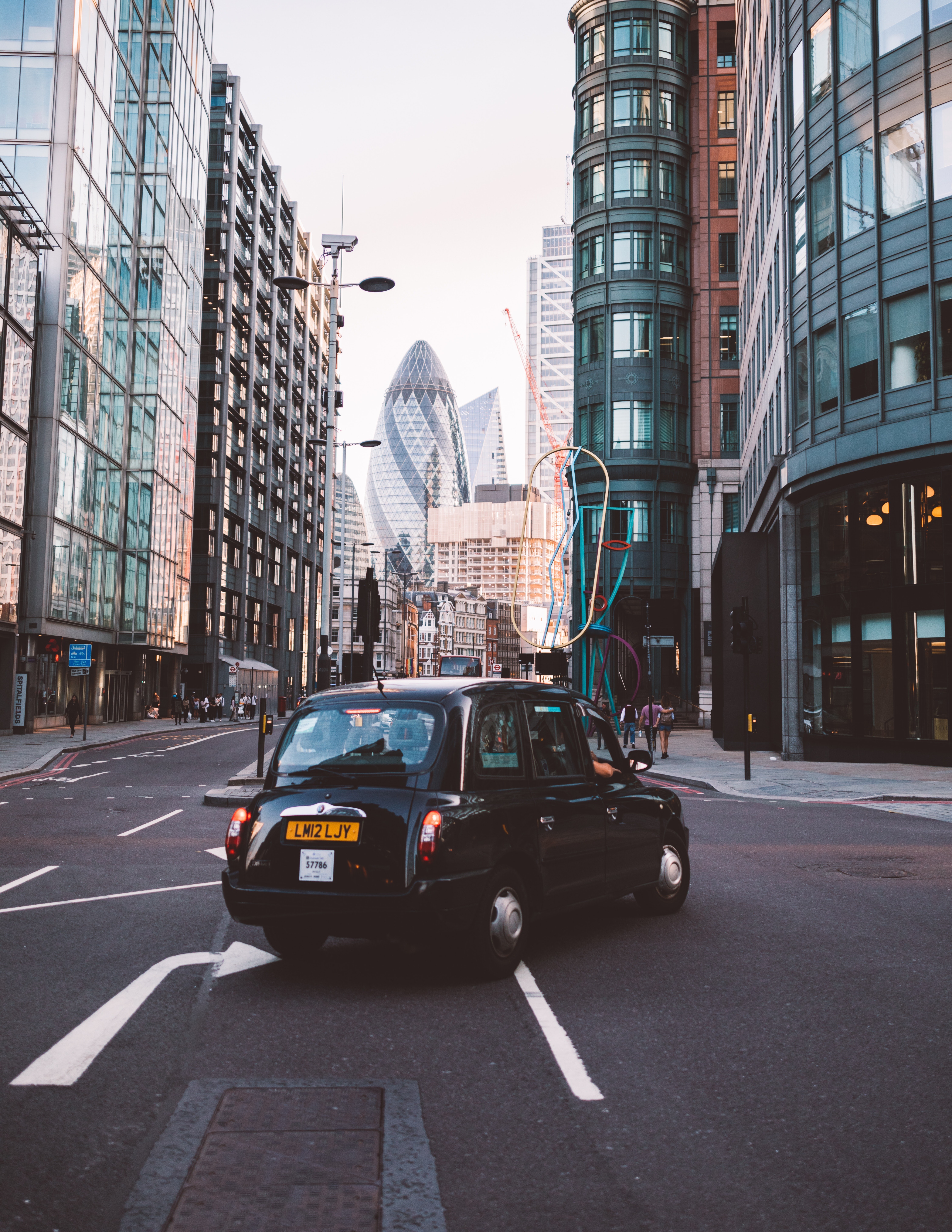
Photo by Humphrey Muleba from Pexels
Not to insult the doctor’s intelligence, but I can’t help but wonder if he realises that we humans, by large, tend to live together. You most likely live with at least one other person. Maybe even a pet or two. And I know for a fact that newborn infants and children don’t live in a big house by themselves. First person to prove me wrong gets £1. Thus the amount of space we’d be saving is already plentiful.
But let’s go further into that. We already build apartments, both social and “affordable”, to handle the need for housing. And according to a recent study in Vietnam, half of all respondents were “satisfied or very satisfied” with their social or “affordable” residences while 20% were not. And something of particular interest: 82% of respondents said they would have chosen the same while almost 20% expressed dissatisfaction with their home, with the researchers noting that “affordable prices, good construction quality and good apartment design” needs to be considered to improve satisfaction. So it’s not the fact that they live in apartments, but rather the quality of their housing and the aesthetic choices that affect how they feel about their homes.
But his other points do require addressing too. Roads, schools and hospitals are usually funded by the taxes you pay. And folks rarely complain about the existence of roads, schools and hospitals, but rather of their quality, but that’s neither here or there. Shopping malls will most likely exist where there exists demand after all, and let’s not be daft when it comes lakes and rivers; we’re clearly going to pull a Lost City of Atlantis and live underwater if needs be (just a little joke for you).
Okay, let’s continue and say that the “where we would all live” isn’t an issue. Our underwater habitats (another joke) and communal housing is all well and fine. But let’s ask “How we can feed them?”, which is a very good question. A study from Journal of Sustainable Agriculture, fittingly titled “We Already Grow Enough Food for 10 Billion People … and Still Can’t End Hunger”, pretty much sums itself up. The study reports that the real cause of hunger is not that we lack the resources to produce food, but rather “hunger is caused by poverty and inequality, not scarcity.”
The researchers also say that in the last twenty years “the rate of global food production has increased faster than the rate of global population growth”, with the Food and Agriculture Organization (FAO) of the United Nations saying that the world produces “more than 1 and a half times the amount of food to feed everyone on the planet”. The FAO, in another document, goes on to say that “an estimated 1/3 of all food produced globally is lost or goes to waste”, with a large amount of food being discarded by retailers, household kitchens, eating establishments and in the supply chain. These figures, while shocking, prove that there is certainly more than enough food in the world to support our “overpopulation” issue.

Writer Arturo Ramo recently published a piece called “The myth of overpopulation”, arriving at the conclusion that “the basic shortcomings to have a dignified life” is the real cause of the world’s “overpopulation”. This, alongside other evidence found in this article, has the makings of an indictment of capitalism. Yet it seems that the debate in which “overpopulation” is framed in is a capitalist one; indeed, if we consider the idea of redistribution of wealth, with wealth inequality being at the highest in history, to be an invalid one, then we can definitely see where a lot of these seemingly unanswerable questions come from.
Africa being the “cradle of overpopulation” as the authors in The Observer article put it, isn’t due to some magical inability for continent to properly utilise its resources, but is largely thanks to colonialism that decimated the economy across the continent. Bricker and Ibbitson rightly pointed out that many countries in the world, due to urbanization, are experiencing lower birth rates and expects the world population to peak around 8 billion.
But it is difficult to deny that our motivations and approaches to issues such as overpopulation inherently assumes that the capitalist approach to these things is the only feasible one, which leads people and policy to increasingly suggest population control. And while I believe that contraception and birth control are important things to have, it should be noted that there is long evidence of states forcibly sterilizing “undesirable” people within their country.
The fact is, we humans are a relatively recent addition to our planet. The Earth has existed long before we did, and will exist for a few billions years to come. There exists enough land on Earth for everyone to live happily, not to mention the preservation of other animals and their habitats. There exists enough food and resources to feed everyone on the planet. The allure of endless wealth and comfort is a seductive one. But let’s not forget how we started and survived so far as a species: through collaboration and looking after each other, including those who need it the most. With our lives so short as it is, why not leave the world a better place than we found it?
 hamlet_irl's writing archive